What If 10 Minutes a Day Could Make You Feel Like Yourself Again?
Discover the gentle seated practice grounded in decades of published research from Harvard, the Mayo Clinic, and the CDC — now in a book designed specifically for adults over 60.
Not sure yet? The free lesson is a complete instruction for one of the movements you will do with the video — no credit card, just your name and email.

Does Any of This Sound Familiar?
Getting older doesn't have to mean slowing down — but for many of us over 60, it can start to feel that way.
- Joint stiffness or achiness that makes mornings hard
- Feeling unsteady on your feet — and the fear that comes with it
- Strength and flexibility that isn't what it used to be
- Mental fog or low energy — not feeling as sharp as you once did
- Wanting to stay active but worried most exercise is too intense or risky
When asked by phone survey, one in four adults over 65 reported falling in the past year. When people were handed a calendar and told to mark it daily, and the number runs closer to one in three — because nobody remembers the stumble that didn't hurt.
Either way: more than a third of those falls cause an injury that needs treatment, or that stops you for a day or more.
Sources: CDC; published fall-prevention research
The good news: falls are preventable, and exercise is the best-evidenced prevention we have. Not all exercise works equally well, though — and in a head-to-head trial, one form beat the others.
In a Head-to-Head Trial,
One Form of Exercise Beat the Rest
"Only one though has actually been shown to prevent falls, and it's tai chi."
— Dr. Robert Wermers, Endocrinologist, Mayo Clinic. Mayo Clinic News Network
Dr. Wermers was comparing non-impact balance exercises — he recommends doing any of them two or three times a week.
"If we could put Tai chi in a pill, everybody would take it. But unfortunately you actually have to practice it to have an effect."
— Dr. Lewis Lipsitz, Harvard Medical School. Harvard Gazette
Tai chi improves balance, builds functional strength, reduces joint pain, and sharpens the mind — through gentle, flowing movements that work for almost anyone, at any fitness level. Chair Tai Chi takes this further: every movement is performed from a seated position, making the practice safe and accessible even if standing exercise isn't an option right now.
A note on the evidence, because you deserve the straight story: the studies above looked at 120 minutes of standing tai chi practice each week. This book adapts those same movements and principles, one by one, for a chair — keeping the elements researchers credit for the benefits (slow weight shifts, coordinated breathing, focused attention) while removing the standing-balance risk.
No mat. No equipment. No gym. Just a chair and 10 minutes.
What the Research Actually Shows
Every source named, so you can check it yourself.
58% fewer falls
In a randomized trial of 670 adults aged 70 and older, all with a history of falls or mobility problems, a tai chi program produced 58% fewer falls than stretching and 31% fewer than a program combining strength, aerobics, and balance work. Twice a week, an hour a session, six months.
Seated practice is built into the CDC-listed program
The fall-prevention program in CDC's compendium includes chair-supported progressions as a formal part of its design — from completely seated, through sit-and-stand, to chair-assisted. Practicing from a chair isn't a workaround. It's the first rung of the ladder the researchers built.
Tai Ji Quan: Moving for Better Balance (Oregon Research Institute)
Listed in CDC's compendium of effective fall interventions
CDC's Compendium of Effective Fall Interventions for Community-Dwelling Older Adults includes tai chi programs among the interventions shown to reduce falls — among them Tai Chi: Moving for Better Balance, developed at the Oregon Research Institute with CDC funding.
Outperformed conventional exercise on balance and mobility
A systematic review and meta-analysis of 12 studies covering 2,901 participants found tai chi a more efficient strategy than conventional exercise for improving functional mobility and balance in relatively healthy older adults.
24 trials, one consistent result
A review pooling 24 randomized trials found tai chi improved every standard balance measure researchers use — timed up-and-go, functional reach, single-leg stance, and walking speed. It worked for healthy older adults and for those already at high risk of falling, and the benefit grew the longer people kept at it.

Doctors Agree
Tai Chi Prevents Falls
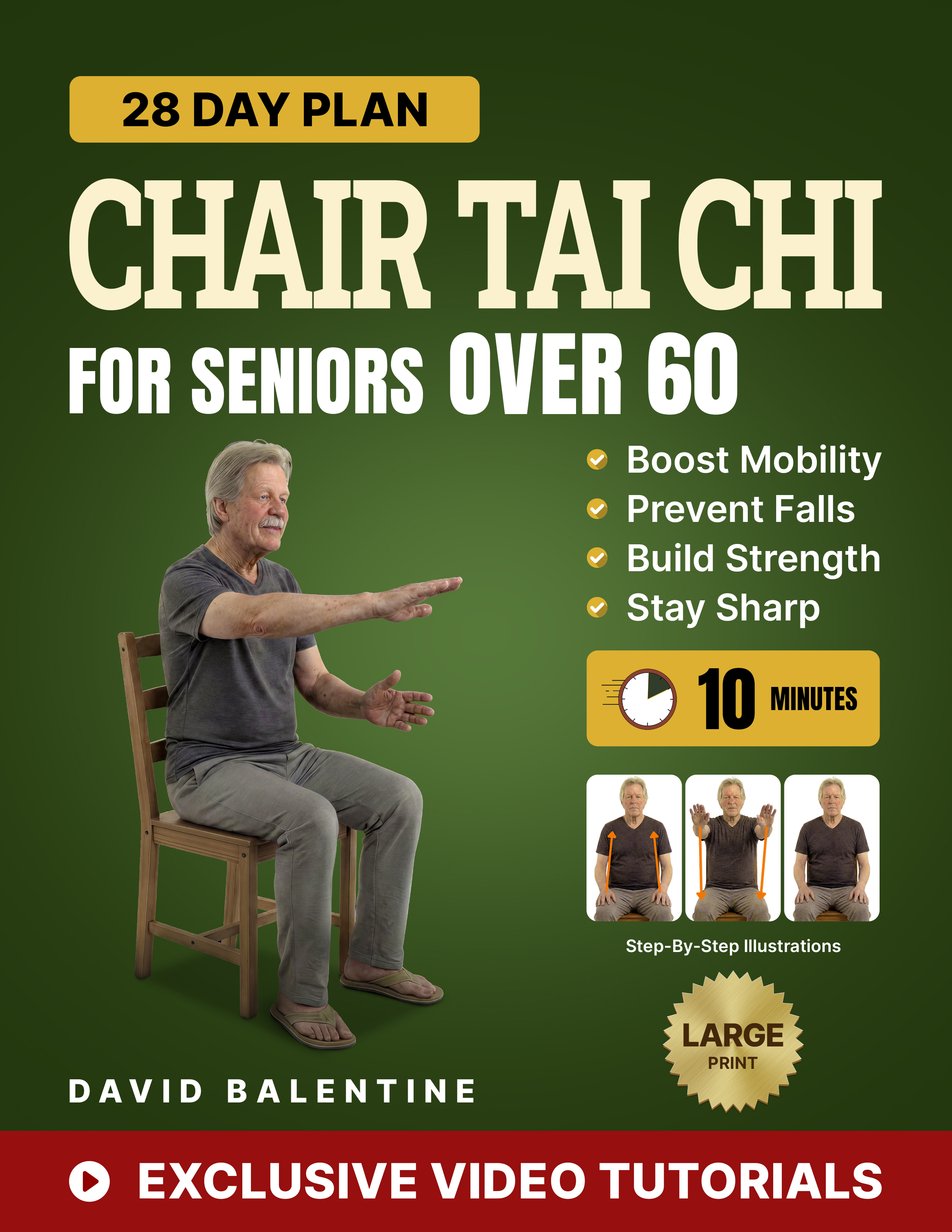
Chair Tai Chi for Seniors Over 60
Safe, Simple 10-Minute Seated Flows to Boost Mobility, Prevent Falls, Build Strength, and Stay Sharp — with Original Video Tutorials
This isn't a fitness book that asks you to get on the floor, buy equipment, or push through pain. It's a practical, step-by-step guide designed for adults over 60 — built around the idea that small, consistent movement creates lasting change.
Each flow is designed for a chair. Every movement has been adapted so it's safe, accessible, and genuinely effective — even if you haven't exercised in years.
- 10-minute seated flows — short enough to do every single day
- Original video tutorials filmed exclusively for this book — follow along in real time
- No equipment, no gym, no prior experience required
- Rooted in decades of clinical research on tai chi and healthy aging
Bought a Book Like This Before and Been Let Down?
You're not alone. Before writing a single page, we studied hundreds of reader reviews of other chair tai chi books. The same five complaints came up again and again — and this book was built to fix every one of them.
Every video works — and matches the book
No dead QR codes. No sending you to someone else's YouTube channel with a generic video. Every movement has its own video, filmed exclusively for this book and named exactly as it appears in the chapter. No account, no app, no expiration.
Photographic multi-frame movement sequences
No stick figures. No single frozen pose. Each movement is illustrated as a multi-frame sequence with motion arcs, so you can see how the movement flows — not guess at it.
Written for the true beginner
Nothing is assumed. Four simple principles teach you the "how" most books skip, and every movement begins with the same step-by-step setup — posture, breath, position — every single time.
A simpler version of every movement
Every movement includes a specific easier variation, and "If You Have..." notes address arthritis, joint replacements, osteoporosis, and vertigo by name — so you're never left wondering.
Honest promises, real research
No "transformed in 7 days." Every claim is tied to named, published research, and the book is honest about what takes weeks and what takes months. That honesty is the point.
Don't take our word for it — test us.
The free intro lesson includes a real follow-along video, so you can confirm the videos work before spending a dime.
Get the Free LessonWhat You Can Expect From 10 Minutes a Day
Not promises — outcomes documented across decades of peer-reviewed research.
Better Balance & Fall Prevention
The flowing weight-shifting movements directly train the proprioception and reflexes responsible for keeping you steady on your feet.
Reduced Joint Pain & Stiffness
Normal exercise is often hard on the joints, especialy for folks with arthritis. Tai Chi's slow movement and no jarring high impact avoids putting stress on tender joints.
Greater Mobility & Flexibility
Gentle range-of-motion flows improve joint flexibility and functional movement — so everyday activities feel easier and less effortful.
Functional Strength Building
The slow, controlled movements build real leg, core, and upper-body strength — the kind that helps you get out of a chair. Exercises you can do.
Sharper Mind & Better Focus
Harvard research found tai chi improves cognitive function and mental agility — the mind-body coordination required actively trains your brain alongside your body.
Calmer, More Restful Days
The slow, meditative rhythm naturally reduces stress, improves sleep quality, and creates a sustainable sense of calm and wellbeing.
Every Movement, Shown to You on Video
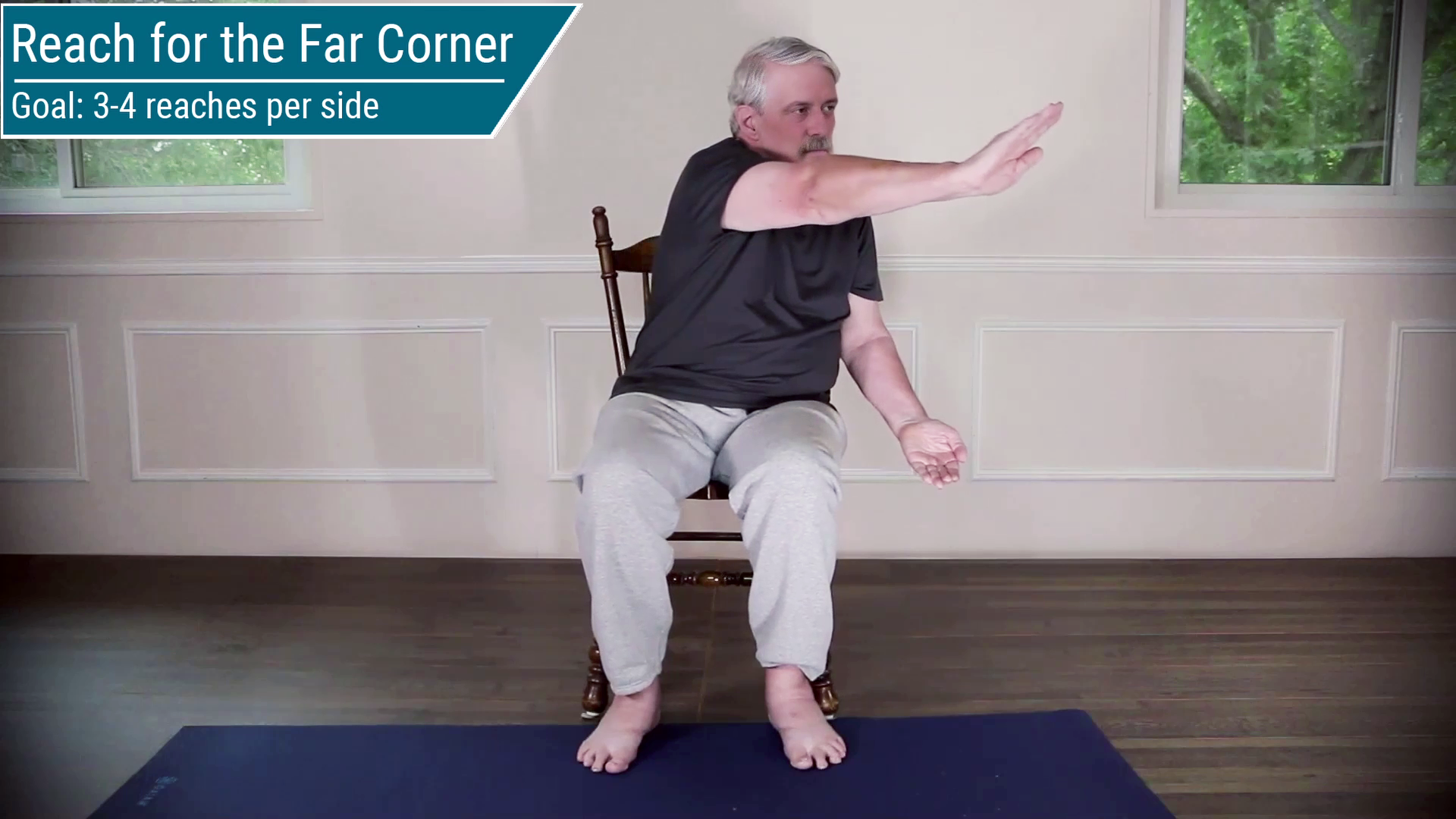
Unlike books that rely on static images, Chair Tai Chi for Seniors Over 60 includes original video tutorials filmed exclusively for this book. Scan a QR code or type a short web address, press play, and follow along. Every video plays in any web browser — phone, tablet, or computer. No account, no app, nothing to install, and the videos never expire.
Worried About a Parent Who's Slowing Down?
Maybe you've noticed it: a hand on the wall walking to the kitchen. Activities quietly dropped. "I'm fine — it's just age." If you're reading this for a parent, this book was written with them in mind, too.
Chair tai chi meets them exactly where they are: seated, safe, ten minutes at a time. There's no floor work, no equipment to buy, and nothing in the tone that talks down to them or tells them what they can't do anymore.
And because a gift like this only works if it actually works: check the videos yourself before you give it. Request the free lesson below and you'll see the same follow-along video experience that's inside the book.

Ready to Start Today?
The book is available now on Amazon. Begin your first seated flow today.
Chair Tai Chi for Seniors Over 60:
Safe, Simple 10-Minute Seated Flows
Video tutorials accessible via QR code or URL inside the book.
Less than a single physical-therapy copay — and yours to keep.
Not Ready to Buy Yet? Try a Free Lesson First
Enter your name and email and we'll send you a free introductory lesson — a complete seated movement instruction and video you can do right now, from any chair in your home. It's also the easiest way to see for yourself the movements are doable and easy, and that the videos are real, labeled, and easy to play.
You're all set!
One more step — check your inbox for a confirmation email and click the button inside. Your free lesson arrives right away
We respect your privacy. No spam, ever. Unsubscribe any time.
Common Questions
A few things people usually wonder before getting started.
None at all. The book is written for complete beginners and builds gradually from the very first page. The original video tutorials mean you can follow along visually, even if reading movement descriptions has felt confusing in other books.
Chair tai chi is designed precisely for these concerns. Every movement is performed seated, removing the standing balance risk during practice. If you have a specific medical condition, checking with your doctor before starting any new exercise program is always a good idea.
Yes you can! The beauty of chair tai chi is that all of the movements simple and safe. This book was designed for beginners who need help with strength and balance. Unlike some other programs we see online, you will not be asked to do exercises that test your strength or push your endurance to the limit. The gains you make come from the slowness of the movements. By the way, the model in our videos is 75 years old.
Walking is wonderful and we'd never suggest you stop. But a meta-analysis from Harvard-affiliated Hebrew SeniorLife found tai chi is a more efficient strategy for improving balance and mobility than conventional exercise — including walking. Tai chi trains the specific proprioceptive pathways responsible for balance in ways that walking alone does not.
Honest answer: depends on what you're watching.
Day one, you find out you can do it. For a lot of readers that's the biggest change in the whole program — the fear goes before anything else does.
By week two or three, you stop needing the book. The sequence gets automatic. That one you'll notice.
Then, somewhere around week six or eight, it'll feel like nothing is happening. I want you to expect that, because that's where most people quit. In the big trial, researchers gave participants ten full weeks just to learn the movements before they started measuring anything. At eight weeks you're still inside the part they called learning.
The measurable changes came later — improvements in things like standing up from a chair showed at the four-month mark, and the fall numbers at six months. You won't feel those arrive. You'll notice them sideways: getting out of the car, reaching a top shelf, standing up without pushing off the arms.
So: something on day one, something at week three, and the real stuff on a scale of months. Anyone promising you a transformed body in 28 days is selling something.
You'll receive a complete seated movement — the same style as the routines in the book — delivered by email. It includes written guidance and a link to a follow-along video. No purchase required and no obligation.
That's the single loudest complaint about books in this category, and this book was built around fixing it. Every movement has its own video, filmed exclusively for this book — not pulled from YouTube — and named exactly as it appears in the chapter, all listed on one index page you reach by QR code or a short web address. No account, no expiration. And you don't have to take our word for it: the free introductory lesson includes a video, so you can verify everything works before you buy.
No. The book is complete on its own — every movement is taught with step-by-step written instructions and photographic illustrated sequences. The videos are a bonus, not a requirement. If you do want them, they play in any web browser on a phone, tablet, or computer — no app and no account needed.
Many buyers are adult children choosing this for a parent. It works well as a gift because it starts where your parent is — seated, gentle, ten minutes at a time — and the tone respects a lifetime of experience rather than lecturing. If you want to be certain before gifting, request the free lesson yourself and preview exactly what they'll get.